Why Pompano Beach Condo SIRS Matters Before You Buy
August 13, 2026
August 13, 2026
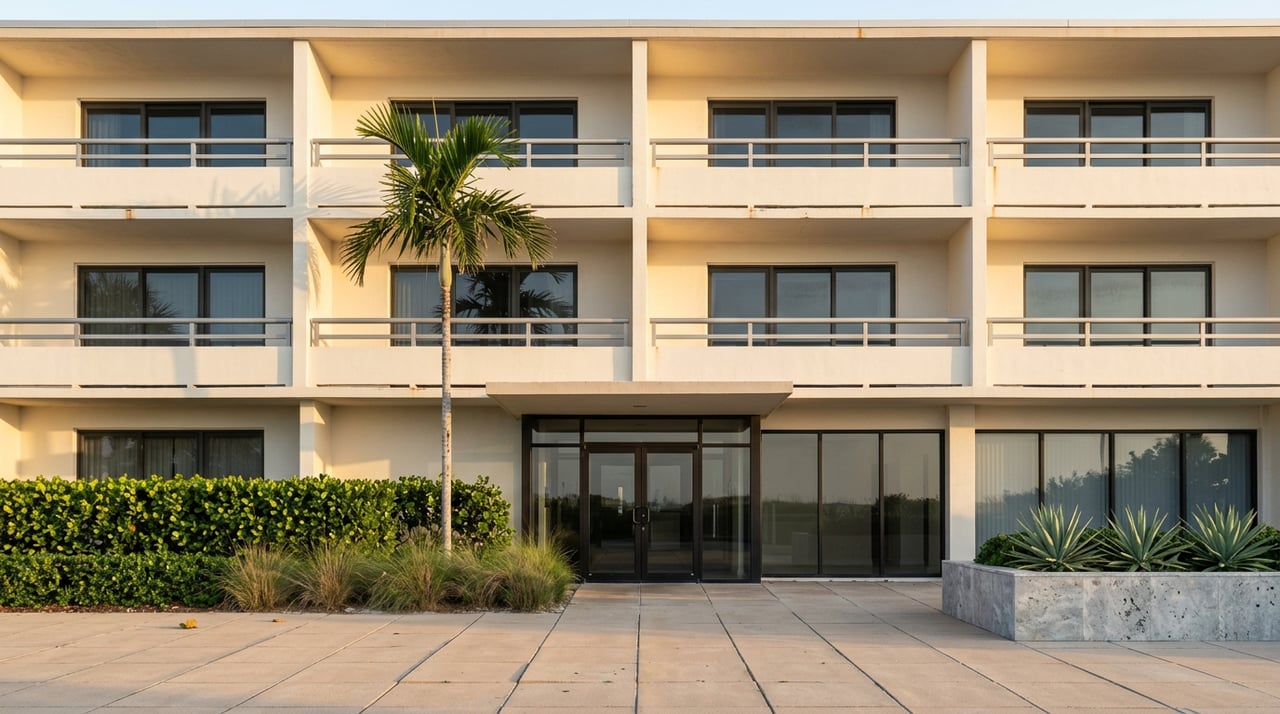
Two buildings on North Ocean Boulevard, one from 1951 and one from 1953, may not be standing much longer. Turks Capital, the firm behind more than $5 billion in real estate acquisitions across office towers, condos, and hotels, already owns the seven-unit Brig O'Doon Condominium and has the adjacent duplex under contract. The plan, still moving through Pompano Beach's Development Review Committee as of February 2026, is a 15-story tower with 59 residences designed by Arquitectonica, the firm behind Brickell City Centre.
That's a development story on its surface. Underneath it is a financing story, and it's the same story playing out inside every resale package on this stretch of coast right now. The buildings being assembled for teardown aren't being sold because the beach access got worse or the location fell out of favor. They're being sold because the cost of keeping a mid-century oceanfront building structurally compliant under Florida's post-Surfside laws has made selling to a developer more attractive than funding the repairs.
If you're buying or selling a condo in Pompano Point this year, that's the mechanism you need to understand before you look at a single floor plan. The reserve study and the milestone inspection report aren't paperwork you review after you've fallen for a unit. They're the document that now decides what a building is actually worth.
Florida's Structural Integrity Reserve Study requirement, created after the Surfside collapse and refined most recently by House Bill 913, applies to any residential condo or co-op building three or more habitable stories tall. For most existing owner-controlled associations, the deadline to complete that first SIRS was December 31, 2025. That date has already passed. A narrow allowance lets buildings with a milestone inspection due by the end of 2026 complete both studies together, but even in that case the SIRS still has to be finished by December 31, 2026.
The part that changes the math for buyers: associations can no longer vote to waive or underfund the reserves a SIRS identifies. Before 2022, a board could look at an aging roof and decide to keep dues flat for one more year. That option is gone. As of January 1, 2026, funding has to follow the schedule the study produces, whether that means higher dues, a special assessment, or a loan against future collections, according to the Florida Division of Condominiums, Timeshares and Mobile Homes.
Broward County adds its own wrinkle. Broward's local Building Safety Inspection Program requires qualifying buildings to complete their first inspection at 25 years, regardless of exact location within the county. For a stretch of oceanfront that includes towers built in the 1960s and 1970s, the local trigger matters.
Ask a local buyer's agent to sort Pompano Point's oceanfront inventory and you'll typically get it split into two groups: the established towers and the newer luxury stock. Buildings like the Corniche, Luna Ocean Residences, Sonata Beach Club, and Plaza at Oceanside anchor the first category. Casamar, Solemar, Sabbia Beach Club, the Ritz-Carlton Residences, Waldorf Astoria, Armani Casa, The W Pompano Beach, and Entourage in the Sun represent the newer wave, some still under construction.
That split used to be mostly cosmetic, a question of finishes and amenity level. It isn't anymore.
| Established oceanfront towers | Newer luxury construction | |
|---|---|---|
| Typical age profile | Decades old, more likely to already be past Broward's 25-year milestone trigger | Recently built or under construction, milestone timeline years out |
| Reserve funding history | May carry decades of underfunded or waived reserves now due for correction | Reserves built into initial budgets |
| Buyer diligence load | SIRS, milestone report, and funding plan all need review before an offer | Fewer historical documents, but a SIRS is required regardless of age, as The HOA Guide explains |
| Financing exposure | Higher risk of lender scrutiny if reserves or repairs are flagged | Lower near-term financing friction |
The practical risk sits heaviest in the older category, where decades of deferred funding are now surfacing all at once.
Two examples from elsewhere in South Florida show what happens when that funding gap gets discovered late instead of early. Residents at The Cricket Club in North Miami were hit with special assessments as high as $134,000 per unit. At Mediterranean Village in Aventura, some owners were assessed up to $400,000. Neither building failed structurally overnight. Both were absorbing the cost of years of reserves that had been voted down to keep monthly dues low, now due in full under a law that no longer allows that vote.
Those buildings aren't in Pompano Point and they sit in Miami-Dade rather than Broward, but the statute that produced those bills is the same one that governs every qualifying building along this coast. A building on this stretch that has been quietly waiving reserves for two decades is carrying the same exposure. The only difference is whether a buyer finds out about it during diligence or after closing.
Here's the friction that catches people who did everything else right. Fannie Mae and Freddie Mac maintain their own condo project approval requirements, and those requirements now overlap directly with SIRS compliance.
Two units with nearly identical square footage, floor, and view can price differently once the building's compliance status is public.
Buyers used to have to ask nicely for a reserve study and hope the board cooperated. That's changed too. Under House Bill 1021, effective January 1, 2026, condo associations with 25 or more units are required to post their governing documents, budgets, and reserve studies to a website or app that owners and prospective buyers can access. If a building can't produce a current SIRS or milestone inspection report on request, that's information in itself.
Before writing an offer on a Pompano Point condo, the documents worth requesting are the same regardless of building age: the most recent SIRS or a written statement that none exists, the milestone inspection report if the building has crossed 25 years, the current reserve funding schedule, and any record of a pending or recently approved special assessment. Florida requires notice before a board meeting where a non-emergency special assessment will be considered, so a building with major work already flagged usually leaves a paper trail before the vote ever happens.
The La Plage situation is the sharpest version of where this leads, but it's a preview, not an outlier. Buildings that have kept up with reserve funding and can show a clean SIRS are positioning themselves to sell at a premium to owner-occupants who want a straightforward closing. Buildings that haven't are increasingly finding their real market not among individual buyers at all, but among assemblers looking at the land under the building rather than the building itself.
If you're planning to sell in the next year or two, the reserve study you can hand a buyer is now part of your listing strategy, not an afterthought for the closing table. A building with funded reserves and a documented compliance history gives your buyer's lender less to object to and gives you a wider pool of qualified offers. A building without one may still sell, but the negotiation starts from a different number.
Should I check a newer building's SIRS? Yes. Check whether the building has a study on file as part of your due diligence.
Can I still get a mortgage if the building hasn't completed its SIRS? It depends on the lender and the specifics of the building's file.
What's the actual difference between a milestone inspection and a SIRS? A milestone inspection is a structural safety evaluation required once a building reaches its applicable age trigger. A SIRS is a financial planning document that estimates the remaining life and replacement cost of major structural components and sets a funding schedule. They can sometimes be completed together, but they answer different questions: one asks whether the building is safe today, the other asks whether it's being paid for tomorrow.
Buying or selling on this stretch of coast now means reading a building's finances as carefully as its floor plan. If you want a second set of eyes on a specific property's reserve position before you write an offer, or you're weighing whether to list now while your building's compliance record is clean, Walker Realty & Investments can walk through the documents with you. Schedule your free market and rental analysis and we'll help you see what the numbers actually say before you sign anything.
This article is general information, not legal, tax or financial advice. Consult a qualified professional about your situation.
Stay up to date on the latest real estate trends.



At Walker Realty & Investments, we’re dedicated to putting our clients first, offering honest, professional service with integrity at every step. Let’s work together today!