Fort Lauderdale Beach Holiday Lights: How Turtle Season Sets the Dates
September 24, 2026
September 24, 2026
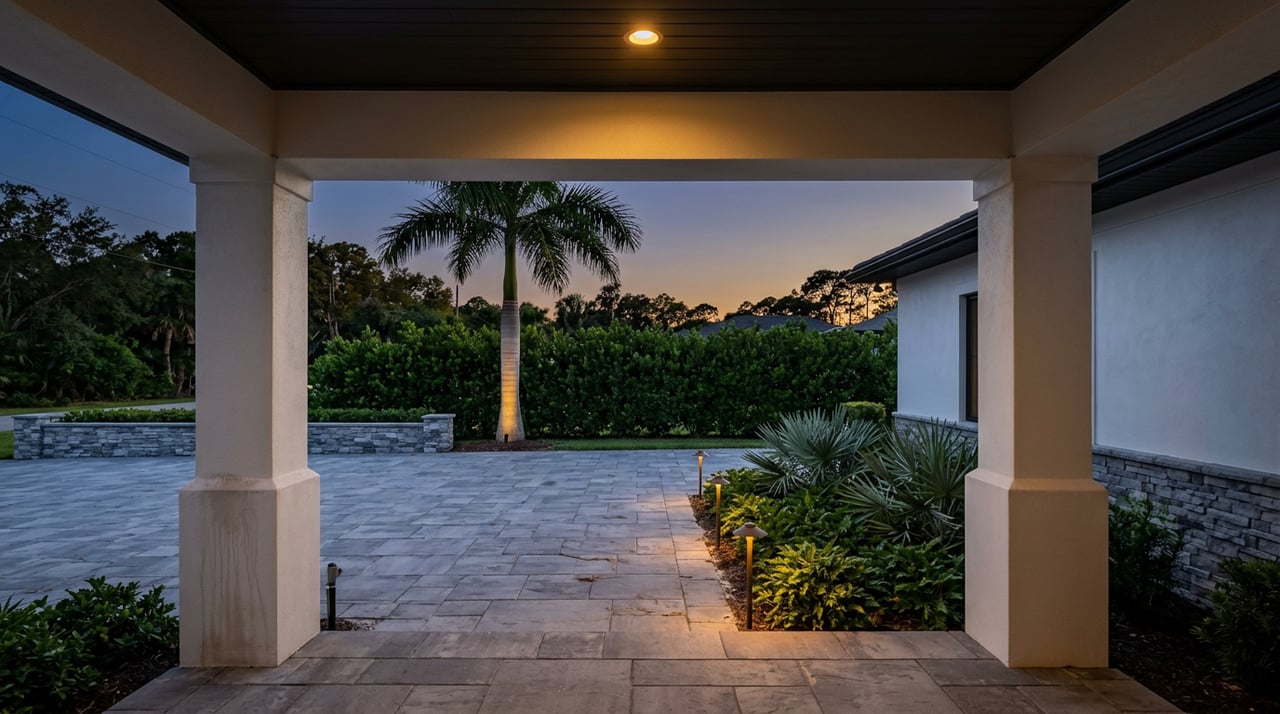
Walk the boardwalk in early November and you'll notice something odd if you've lived here a while. Downtown, the Riverwalk district is already glowing. Las Olas has its street festival on the calendar. But turn east onto A1A and the beachfront still looks like August. No string lights on the balconies that had them last December. No illuminated palm trunks outside the hotels. If you've ever wondered why your own building's holiday decorations always seem to lag a few weeks behind everyone else's, the answer isn't a lazy property manager. It's a sea turtle.
Fort Lauderdale Beach runs on two calendars every year, and most residents only ever notice the one with restaurant openings and boat show dates on it. The other calendar is quieter, enforced by code inspectors instead of hype, and it dictates almost exactly when your neighborhood is legally allowed to look festive again.
The City of Fort Lauderdale says nesting season begins in early March. The rules aren't a polite suggestion. The Florida Fish and Wildlife Conservation Commission says decorative lights should stay off and shouldn't come back on until after nesting season ends on October 31.
For oceanfront buildings, that means a roughly eight-month stretch when the lighting rules apply. They're the reason your building's holiday lights and patio string lights have to wait.
Here's the part that actually explains the lag residents notice. The City of Fort Lauderdale doesn't just publish an ordinance and walk away. Before each nesting season even starts, staff from the city's Community Enhancement and Compliance division visit hotels, condo associations, and beachfront residences that sit within sightline of nesting areas, hand them a Sea Turtle Awareness Package, and follow up with inspections. Properties that stay out of compliance get a 10-day notice to fix it. If they don't, the case can go to a Special Magistrate Hearing, where the city can extend the deadline or start assessing daily fines.
That enforcement machinery runs both directions. It's the reason lights go dark in the spring, and it's part of the reason they don't snap back on the morning of November 1. Building managers who spent months keeping fixtures shielded and amber aren't going to flip on unrestricted white string lights the same week the calendar turns, especially with code enforcement still fresh in memory. Meanwhile, the buildings and public spaces downtown, away from the beach, were never under that restriction to begin with. That's the actual mechanism behind the gap you've been noticing. It isn't that downtown decorates earlier out of enthusiasm. It's that downtown was never legally required to wait.
A few points of comparison make the split obvious:
Once the beach clears that October 31 threshold, the city's own celebration follows a few weeks later. Fort Lauderdale Parks and Recreation runs Light Up the Beach as part of its citywide Light Up the Holidays series, and it's the beachfront's actual switch-on moment. In recent years the event has landed in mid-to-late November, bringing more than 50,000 holiday lights along the beachfront and the return of Olas, the city's oversized 20-foot beach snowman, stationed at the intersection of A1A and Las Olas Boulevard. It comes with live holiday music and a kids' zone, and it's free to attend.
Watch the parks department's calendar for this year's exact date if you want to plan around it, but the pattern holds every season: the beach's holiday kickoff isn't scheduled around shopping traffic or tourism marketing. It's scheduled around the first weeks it's actually legal to plug in.
Lighting isn't the only rhythm on the beach that resets around this date. If you walk a dog on the sand, you've probably run into Canine Beach, the designated stretch on the west side of A1A just north of Sunrise Boulevard. Its off-leash hours aren't fixed year-round either. From April through October, the beach is open to dogs Friday through Sunday from 3 to 7 p.m. Starting in November, those hours shift an hour earlier, closing at 6 p.m. instead of 7.
Taken on its own, that's a minor scheduling note. Taken alongside the lighting restrictions, it points to something bigger about how this stretch of coastline actually operates. Fort Lauderdale Beach isn't governed by one civic calendar the way most neighborhoods are. It's governed by a wildlife calendar first, and every human-facing schedule, from what glows on your balcony to when your dog can be off leash, gets built around it.
Once the beach's lighting restrictions lift and Light Up the Beach has run its course, the rest of the season compresses fast. The Seminole Hard Rock Winterfest Boat Parade, marking its 55th year, is confirmed for December 12, 2026, with a non-motorized vessel preshow at 5:30 p.m. and the main parade launching at 6 p.m. The route starts near Stranahan House on the New River, moves out to the Intracoastal Waterway, and continues north to Lake Santa Barbara in Pompano Beach, a 12-mile run that residents up and down the coast use as their unofficial start of the holidays on the water.
For a beach community observing lighting restrictions through October 31, the period from the first string lights allowed back on a balcony to the December 12 parade plays out in roughly six weeks. Downtown gets ten weeks. The beach's holiday schedule follows the nesting-season calendar.
None of this changes anything about buying or selling a home. But if you own or manage a property along this stretch of coastline, whether you live in it year-round, use it seasonally, or run it as a short-term rental, the compliance calendar isn't trivia. It's the reason you can't just tell a cleaning crew or a rental guest to leave the porch lights on through the fall, and it's the reason the smart move for anyone managing a beachfront property is knowing the lighting requirements before nesting season starts each spring, not after an inspector's notice shows up.
That's the kind of detail that separates a property that runs smoothly through the season from one that ends up in front of a Special Magistrate. It's also exactly where a team that manages both the sale side and the operating side of these properties earns its keep. If you own along Fort Lauderdale Beach and want a second set of eyes on how your property's lighting, guest calendar, or seasonal rental strategy lines up with what the city actually enforces, Walker Realty & Investments has spent years working both sides of that line, brokerage and hands-on rental management, right here on this stretch of sand.
This article is general information, not legal, tax or financial advice. Consult a qualified professional about your situation.
Stay up to date on the latest real estate trends.
At Walker Realty & Investments, we’re dedicated to putting our clients first, offering honest, professional service with integrity at every step. Let’s work together today!